
Key Trends in Performance Evaluation for 2025
the performance review, whether referred to as the annual appraisal, performance conversation or development review, is undergoing significant transformation. What was once a formal, administrative exercise is now viewed as a strategic lever for talent
What was once a formal, administrative exercise is now viewed as a strategic lever for talent retention, capability development and organisational alignment. This shift is driven by evolving employee expectations, the increasing importance of behavioural and transversal skills, and the need for organisations to build resilience and internal mobility in a competitive labour market.
1. From an Annual Ritual to an Ongoing Dialogue
The traditional once-a-year appraisal cycle is increasingly being replaced by more continuous, conversation-based performance management.
Organisations are introducing:
- Regular check-ins
- Mid-year reviews
- On-the-spot feedback linked to specific work situations
The aim is to:
- Adjust goals more dynamically
- Support performance in real time
- Encourage a healthier and more transparent managerial relationship
HR Implication
Managers need support in:
- Facilitating developmental conversations
- Giving balanced, actionable feedback
- Co-defining objectives that are realistic, relevant and evolving
2. Incorporating Multiple Perspectives
Performance today is rarely the product of isolated contribution.
As a result, many organisations are moving towards multi-source input – not always a formal 360°, but a broader inclusion of:
- Project leads
- Peers
- Cross-functional stakeholders
This approach strengthens:
- The accuracy and fairness of evaluations
- Recognition of collaborative contributions
- Development discussions based on real work contexts
Critical Success Factors
- Transparent communication on purpose and use of feedback
- Safeguards around confidentiality
- A calibration process to ensure equity across teams
3. A Shift from Judgement to Development
Evaluation frameworks are being redesigned to give greater weight to:
- Behavioural indicators
- Transferable skills
- The individual’s capacity to progress over time
The goal is to move from a retrospective assessment to a forward-looking development plan, aligned with:
- Skills needs
- Career aspirations
- Internal mobility pathways
This reinforces a culture where employees perceive performance management as supportive rather than punitive.
4. Taking Collective and Cultural Contributions into Account
Performance is increasingly evaluated not solely through individual targets but also through:
- The quality of collaboration
- Alignment with organisational values
- Contribution to team cohesion and shared outcomes
This helps organisations strengthen cultural consistency and ensure that performance reinforces, rather than undermines, collective effectiveness.
5. The Role of Digital Tools: Structure Without Rigidity
Modern HR systems are shifting from simple form repositories to performance enablement platforms.
They support HR teams and managers by enabling:
- The launch and monitoring of review campaigns
- Guided workflows for self-evaluation and manager validation
- Centralised performance history
- Consolidated capability and skills insights at organisational level
The intention is not to replace conversation, but to provide clarity, continuity and traceability.
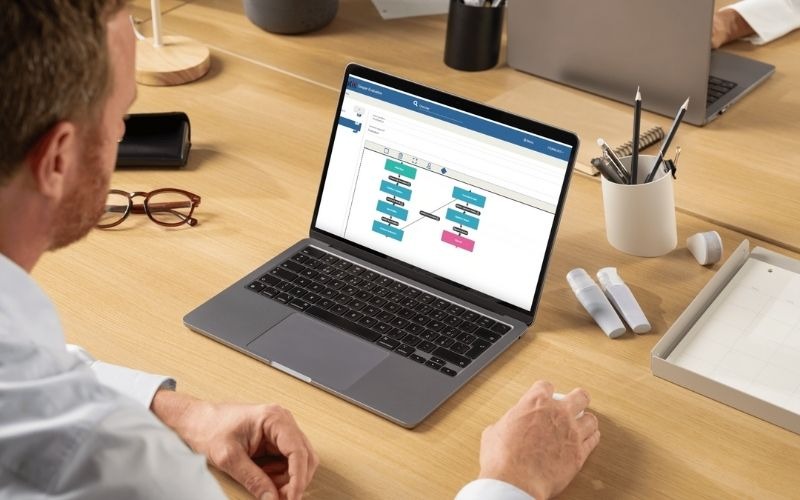
Focus: The Gesper Evaluation Module
Within this evolving landscape, some organisations are opting for solutions that are:
- Modular
- Straightforward to deploy
- Adaptable to Luxembourg’s multilingual and multi-structure context
The Gesper Evaluation module:
- Supports both performance and development conversations
- Allows organisations to tailor competency frameworks and evaluation criteria
- Can be deployed in a matter of weeksCan be used standalone or integrated with existing HRIS environments
- And can be connected to the Skills and Training modules to ensure continuity between evaluation and development
This flexible architecture enables organisations to evolve their performance management practices progressively, without structural disruption.
Conclusion
Performance evaluation is entering a new phase: more continuous, collaborative and future-oriented.
The question is no longer whether to evaluate performance, but how to make the process meaningful, supportive and strategically aligned.
The organisations that succeed will be those that combine:
- Structured, data-informed HR processes
- Managerial capability building
- And authentic, human-centred dialogue
A lire aussi :
24 June 2026